

Last updated: August 12, 2026
For men dealing with unwanted chest tissue, skin lump removal through newer minimally invasive techniques offers significant advantages over traditional open surgery. Boston Gyno – Gynecomastia Surgery Center now offers PEXsculpt, a breakthrough approach developed by Dr. Edwin Ishoo that removes glandular tissue through tiny punctures rather than large incisions. Combining VASER ultrasound-assisted fat emulsification with power-assisted liposuction and microdebrider glandular reduction, PEXsculpt delivers sculpted male chest contouring without the infra-areolar scar or nipple inversion risks common with traditional gland excision. This technique significantly reduces surgical trauma and recovery time, giving men in the Boston area a less invasive path to a confidence-building chest profile.
What Is PEXsculpt and How Does It Improve Skin Lump Removal for Men?
PEXsculpt is a minimally invasive skin lump removal technique that removes excess chest tissue through small puncture sites rather than a single large incision. Traditional gynecomastia surgery typically requires an infra-areolar or periareolar incision to access and excise glandular tissue directly, which can leave a visible scar along the border of the nipple-areola complex and, in some cases, contribute to nipple inversion. PEXsculpt fundamentally changes this approach by combining multiple tissue-removal modalities – VASER ultrasound-assisted liposuction, power-assisted liposuction, and microdebrider glandular reduction – all delivered through the same minimal-access puncture sites used for fat removal.
What Makes PEXsculpt a Minimally Invasive Approach?
The minimally invasive nature of PEXsculpt lies in its access strategy: instead of one long incision, the surgeon creates two to three small punctures, each measuring just a few millimeters. These punctures serve as portals for all instruments needed during the procedure, including the VASER probe, liposuction cannula, and microdebrider. This approach preserves the overlying skin and subcutaneous tissue to a greater degree than traditional open surgery, reducing trauma to the surgical site and supporting a smoother, more natural-looking chest contour.
How Does PEXsculpt Eliminate Large Incisions and Visible Scarring?
By eliminating the need for an infra-areolar or periareolar incision, PEXsculpt removes the primary source of visible scarring in traditional male breast reduction. The small punctures heal with minimal perceptible marks, and because the instruments are introduced remote from the nipple-areola complex, the natural appearance of the nipple and surrounding skin is preserved. For men concerned about scarring – one of the most common reasons patients delay treatment – this represents a meaningful improvement over conventional techniques.
What Types of Unwanted Tissue Can Be Addressed With Skin Lump Removal Techniques?
Minimally invasive techniques like PEXsculpt are designed to address the two primary tissue components of gynecomastia: fatty tissue and glandular breast tissue. Fatty tissue responds well to ultrasound-assisted emulsification and liposuction, while firm glandular tissue – which cannot be removed by liposuction alone – requires a separate reduction step. Together, these modalities allow the surgeon to achieve comprehensive chest contouring without open surgery, making the technique suitable for a wide range of gynecomastia presentations.
How Does PEXsculpt Address Gynecomastia and Chest Tissue?
Gynecomastia refers to the enlargement of male breast tissue, which can result from hormonal imbalances, certain medications, or genetic factors. The condition often involves a combination of excess fat deposition and glandular tissue proliferation, creating a chest appearance that many men find self-conscious. PEXsculpt treats both components through a staged approach: VASER ultrasound first emulsifies fatty tissue, power-assisted liposuction removes that liquefied fat, and a microdebrider then reduces the underlying glandular tissue through the same puncture access. This comprehensive approach produces results comparable to traditional open gland excision while avoiding its incisions.
What Is the Difference Between Fat, Glandular Tissue, and Skin Lumps?
Understanding tissue types helps men recognize what PEXsculpt can treat. Fatty tissue is soft and responds to liposuction technologies; it is the most common component of gynecomastia, particularly in men with generalized weight gain. Glandular tissue is firmer and more fibrous, resembling the breast tissue found in women, and does not respond to liposuction alone. Skin laxity or skin lumps, while sometimes present, are addressed separately through skin contraction during healing and, in some cases, limited skin resection. Lipoma removal and benign growths removal fall into related but distinct categories – fatty lumps or encapsulated tissue masses that may exist independently of gynecomastia and can often be addressed through similar minimally invasive principles.
How Does VASER Ultrasound-Assisted Technology Improve Skin Lump Removal Outcomes?
VASER technology represents a significant advancement in skin lump removal by using ultrasound energy to selectively target and liquefy fatty tissue while preserving surrounding structures such as nerves, blood vessels, and connective tissue. In clinical practice, this selective emulsification produces smoother fat removal with less trauma to adjacent tissues compared to traditional liposuction, supporting better contour outcomes and reduced postoperative bruising. The emulsified fat is then removed using suction-assisted or power-assisted methods, leaving a more uniform underlying surface for glandular tissue reduction.

What Role Does Ultrasound Play in Fat Emulsification?
Ultrasound energy delivered through the VASER probe disrupts the structural integrity of fat cells without generating the thermal heat that could damage surrounding tissues. The probe emits high-frequency sound waves that cause fat cells to break apart and release their contents, creating a liquefied emulsion that flows easily through the liposuction cannula. This process, known as fat emulsification, allows the surgeon to remove fat more uniformly and with less physical effort, reducing the risk of contour irregularities that can occur with mechanical scraping techniques.
How Does Power-Assisted Liposuction Complement VASER?
Power-assisted liposuction uses a rapidly oscillating cannula to mechanically loosen tissue, complementing the ultrasound effects of VASER. While VASER emulsifies fatty tissue, PAL handles the remaining fibrous tissue and ensures thorough removal of the liquefied contents. Together, these technologies allow the surgeon to contour the chest through very small access points with precision and control, achieving the sculpted male chest profile that men seek from gynecomastia treatment.
What Is the PEXsculpt Procedure Experience Like for Men?
The PEXsculpt procedure is performed under anesthesia, and patients can expect a streamlined, multi-stage process designed to address each tissue type systematically. After the initial access is established through small punctures, the surgeon proceeds through sequential steps: fat emulsification, fat removal, and glandular tissue reduction. Each stage builds on the previous one, allowing the surgeon to assess the chest contour progressively and make adjustments as needed. The procedure typically concludes with closure of the puncture sites and application of a compression garment to support healing.
How Are Small Punctures Used Instead of Traditional Incisions?
Small punctures – typically two to three per side – serve as the sole access points for all instruments during PEXsculpt. These punctures are strategically placed in inconspicuous locations, often along the lateral chest or lower areolar border, to allow optimal instrument angles while keeping scars minimal. Unlike the longer incisions used in traditional surgery, these tiny access sites do not require extensive suturing and heal with barely noticeable marks, making them a preferred option for men concerned about visible scarring.
What Happens During Glandular Tissue Reduction With Microdebrider?
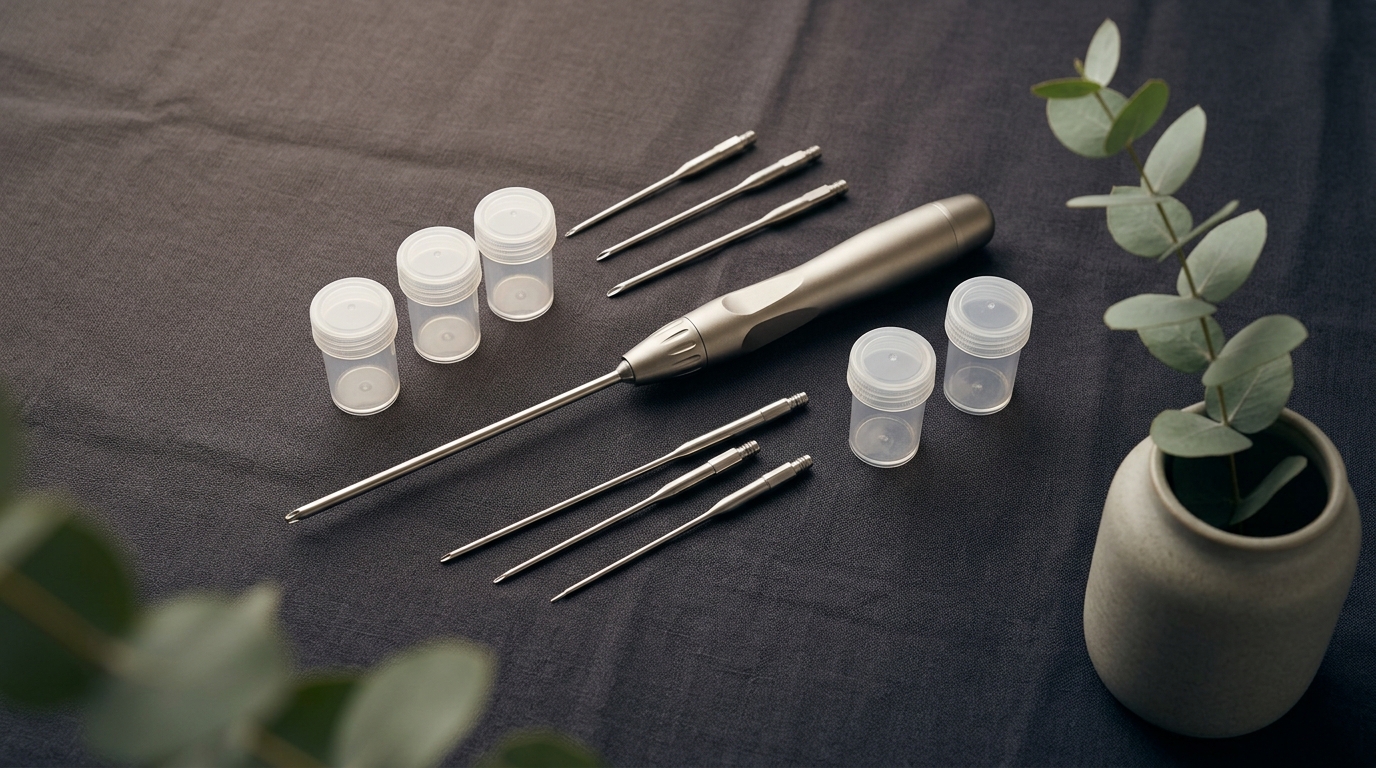
Glandular tissue reduction in PEXsculpt uses a microdebrider – a small, rotating surgical blade – introduced through the same puncture sites. The microdebrider precisely shaves and removes firm glandular tissue while the surgeon maintains direct visualization through the operative field. This step is critical because glandular tissue cannot be adequately addressed by liposuction alone; it requires mechanical removal to achieve the flat, masculine chest contour that patients desire. The precision of the microdebrider allows for controlled, even reduction without the tissue distortion that can occur with blind excision.
How Does PEXsculpt Reduce Scarring Compared to Traditional Surgery?
Traditional gynecomastia surgery often requires an incision along the lower border of the nipple-areola complex, running from several centimeters to nearly the entire perimeter of the areola. This approach, while providing direct access to glandular tissue, leaves a scar that is inherently visible given its location on the anterior chest. PEXsculpt eliminates this incision entirely, replacing it with small remote punctures that heal with minimal scarring and do not alter the natural appearance of the nipple and areola.
What Is the Infra-Areolar Scar and Why Does Traditional Surgery Cause It?
The infra-areolar scar results from an incision placed along the lower half of the areolar border, allowing the surgeon to flip the nipple-areola complex upward to access and remove glandular tissue directly. While effective for tissue removal, this approach permanently alters the appearance of the nipple-areola complex and creates a scar in one of the most visible areas of the male chest. The scar may also widen or become more prominent over time, and the healing process can alter nipple position and projection.
How Does Avoiding This Incision Prevent Nipple Inversion?
Nipple inversion – where the nipple is pulled inward or lies flat against the chest – is a known complication of traditional gynecomastia surgery that uses infra-areolar or periareolar incisions. By avoiding these incisions entirely, PEXsculpt preserves the natural suspensory ligaments and structural relationships of the nipple-areola complex. Men who undergo PEXsculpt are far less likely to experience nipple inversion or other deformities related to surgical access, resulting in a chest appearance that looks and feels natural.
What Recovery and Results Can Men Expect After PEXsculpt?
Recovery after PEXsculpt is generally faster and more comfortable than recovery following traditional open gynecomastia surgery. Patients typically wear a compression garment for several weeks to minimize swelling and support the newly contoured chest. Most men return to desk work within a few days, with light activity resuming within the first week and more strenuous exercise around four to six weeks. The small puncture sites heal quickly, and the absence of a large incision significantly reduces postoperative discomfort.
How Does Recovery Compare to Traditional Gynecomastia Surgery?
Traditional gynecomastia surgery involving open gland excision generally requires a longer recovery period due to the larger incision, tissue dissection, and suturing involved. Patients may experience more significant pain, swelling, and activity restrictions for several weeks, and the scar maturation process can take months. PEXsculpt reduces each of these burdens by minimizing surgical trauma, which translates to less postoperative pain, faster return to normal activities, and a quicker resolution of swelling. For men seeking a practical treatment option that fits into busy professional and personal lives, this difference in recovery experience is substantial.
When Can Men Return to Work and Exercise After Treatment?
Most men undergoing PEXsculpt can return to desk-based work within three to five days, with a gradual transition to normal activity levels within the first two weeks. Light cardiovascular exercise may resume around two to three weeks, while more strenuous weight training and chest-focused exercise typically become appropriate around four to six weeks, depending on individual healing. The compression garment is usually worn for the first three to four weeks to support optimal contouring and swelling reduction. Final results continue to refine over several months as residual swelling resolves and the skin contracts to the new chest shape.
Frequently Asked Questions
What is PEXsculpt and how does it work for male breast reduction?
PEXsculpt is a minimally invasive skin lump removal technique developed by Dr. Edwin Ishoo that removes excess chest tissue through small punctures instead of large incisions. It combines three modalities: VASER ultrasound-assisted fat emulsification, power-assisted liposuction, and microdebrider glandular reduction. The surgeon creates two to three tiny punctures through which all instruments access the tissue, allowing comprehensive chest contouring without the infra-areolar scar associated with traditional gynecomastia surgery.
How does PEXsculpt eliminate visible scarring compared to traditional gynecomastia surgery?
PEXsculpt eliminates visible scarring by replacing traditional incisions with tiny two to three millimeter puncture sites. Traditional gynecomastia surgery requires an infra-areolar or periareolar incision along the nipple-areola complex, which leaves a permanent visible scar. PEXsculpt’s small punctures heal with barely noticeable marks and are strategically placed in inconspicuous locations along the lateral chest or lower areolar border, preserving the natural appearance of the nipple and surrounding skin.
What types of tissue can PEXsculpt remove during male chest contouring?
PEXsculpt addresses both primary tissue components of gynecomastia: fatty tissue and glandular breast tissue. Fatty tissue responds well to VASER ultrasound-assisted emulsification and power-assisted liposuction. Firm glandular tissue, which resembles female breast tissue and cannot be removed by liposuction alone, requires microdebrider reduction. The surgeon uses the same minimal-access puncture sites for all tissue removal, achieving comprehensive chest contouring without open surgery.
How does VASER ultrasound technology improve fat removal in PEXsculpt?
VASER technology uses ultrasound energy to selectively target and liquefy fatty tissue while preserving surrounding structures like nerves, blood vessels, and connective tissue. The high-frequency sound waves disrupt fat cell structural integrity without generating thermal heat that could damage adjacent tissues. This selective emulsification produces smoother fat removal with less trauma, supporting better contour outcomes and reduced postoperative bruising compared to traditional liposuction.
What is the recovery timeline after PEXsculpt?
Recovery after PEXsculpt is faster than traditional open surgery. Patients wear a compression garment for three to four weeks, return to desk-based work within three to five days, and resume light cardiovascular exercise around two to three weeks. Strenuous weight training and chest-focused exercise typically become appropriate around four to six weeks. The small puncture sites heal quickly, and the absence of a large incision significantly reduces postoperative discomfort.
How does PEXsculpt prevent nipple inversion compared to traditional surgery?
PEXsculpt prevents nipple inversion by avoiding infra-areolar and periareolar incisions entirely. Traditional gynecomastia surgery requires an incision along the lower border of the nipple-areola complex, which can damage suspensory ligaments and alter the structural relationships of the nipple-areola complex during healing. By eliminating this incision, PEXsculpt preserves the natural architecture, resulting in a chest appearance that looks and feels natural without risk of nipple inversion or other deformities.
When do men see final results after PEXsculpt treatment?
Final results after PEXsculpt continue to refine over several months as residual swelling resolves and the skin contracts to the new chest shape. The compression garment supports optimal contouring and swelling reduction during the first three to four weeks. Most men see significant improvement within the first few weeks, with progressive refinement as healing continues. The combination of reduced surgical trauma and minimal access points supports faster visible improvement compared to traditional open surgery.
Conclusion
PEXsculpt represents a meaningful step forward in male chest contouring, offering men a minimally invasive alternative to traditional gynecomastia surgery with less scarring, reduced tissue trauma, and a faster return to daily life. The combination of VASER ultrasound-assisted fat emulsification, power-assisted liposuction, and microdebrider glandular reduction through small punctures achieves results that rival those of open surgery without the associated drawbacks. For men in the Boston area who have been considering treatment for gynecomastia or unwanted chest tissue, this approach provides a compelling option worth exploring. Boston Gyno – Gynecomastia Surgery Center, led by Dr. Edwin Ishoo, welcomes men from across the greater Boston region – including Newton, Watertown, Medford, Quincy, Cambridge, and surrounding communities – to schedule a consultation and learn whether PEXsculpt is the right fit for their goals.
Related reading
- Liposuction procedures for male chest contouring and body sculpting in Boston. Surgical fat removal technique used in gynecomastia treatment and male breast reduction procedures to address excess fatty tissue and create a more masculine chest appeara
- FTM top surgery procedures designed to help transgender men achieve a masculine chest contour through breast tissue removal and chest reconstruction. Gender-affirming surgical options address dysphoria and support transition goals with specialized te
- Abdominoplasty surgery removes excess abdominal skin and fat while tightening weakened or separated muscles to create a flatter, more toned stomach appearance. The procedure addresses loose skin from pregnancy, weight loss, or aging that cannot be im



