


Last updated: September 7, 2026
For men in the Boston area who have undergone gynecomastia surgery only to find persistent concerns, a specialized revision procedure may offer the solution needed. Boston specialists have published detailed guidance outlining the four specific complications that revision surgery addresses: residual breast tissue, skin drooping, chest asymmetry with contour deformities, and displaced nipple location. This development provides men in communities like Cambridge, Brookline, and Newton with clearer expectations about what corrective procedures can achieve following an initial treatment.
What Four Complications Does Gynecomastia Revision Surgery Address in Boston?
Gynecomastia revision surgery addresses four distinct post-operative deformities that may persist or develop after initial male breast reduction procedures. These complications include residual breast tissue left behind from the original surgery, skin laxity or drooping that was not adequately addressed, chest asymmetry with irregular contours including depressions, and unnatural nipple positioning. Each of these conditions requires specialized assessment and tailored surgical approaches to correct effectively.
What Is Residual Breast Tissue After Initial Gynecomastia Surgery?
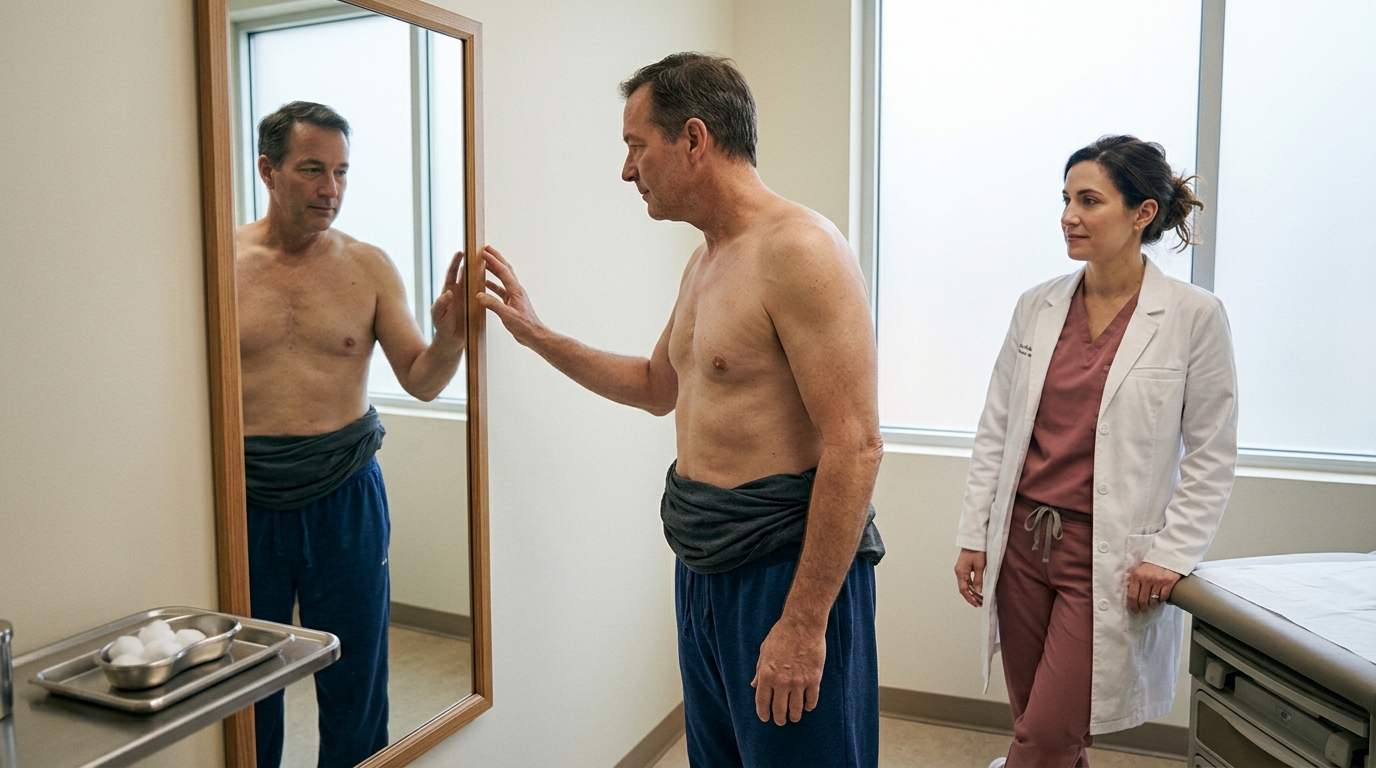
Residual breast tissue refers to glandular or fatty tissue that remains after the initial gynecomastia procedure, potentially leaving the chest with a still-enlarged or disproportionate appearance. This complication may result from conservative initial treatment, difficulty accessing fibrous tissue beneath the nipple-areola complex, or incomplete assessment of the tissue composition before surgery. Revision surgery allows surgeons to precisely target and remove this remaining tissue while preserving natural chest contours.
How Does Skin Drooping Require Revision Surgery?
Skin drooping, also termed ptosis, occurs when the breast skin fails to contract adequately following tissue removal, resulting in a deflated or sagging appearance. Severe gynecomastia cases and older patients with reduced skin elasticity are particularly susceptible to this outcome. Correction typically involves skin resection techniques, with the most significant cases potentially requiring breast amputation and free nipple grafting to achieve a masculine chest contour.
What Is Gynecomastia Revision Surgery?
Gynecomastia revision surgery is a secondary procedure designed to correct complications or unsatisfactory aesthetic outcomes from a previous male breast reduction operation. Unlike primary gynecomastia treatment, revision surgery addresses deformities created or left unresolved by the initial intervention, requiring a different surgical strategy and often more complex planning.
How Does Revision Surgery Differ From Initial Gynecomastia Treatment?
Revision surgery differs fundamentally from initial treatment because surgeons must work within altered anatomy, navigating scar tissue and modified tissue planes from the first procedure. The presence of scar tissue from the original surgery affects tissue elasticity, healing responses, and the precision with which surgeons can shape the chest. This altered landscape demands greater surgical skill and more detailed pre-operative planning to achieve optimal correction.
Why Is Secondary Male Breast Surgery More Complex?
Secondary male breast surgery presents heightened complexity due to several anatomical and technical factors. Scar tissue from the first operation creates planes that are less predictable and more prone to bleeding or contour irregularities. Additionally, previous tissue removal may have created asymmetries that require sophisticated balancing techniques. Surgeons performing revision procedures must possess extensive experience with male chest anatomy and the specific technical demands of working within previously operated tissue.
Why Do Initial Gynecomastia Procedures Sometimes Need Correction?
Initial gynecomastia procedures may require correction for multiple reasons related to surgical technique, patient healing, or anatomical factors present at the time of the original operation. Understanding these contributing factors helps patients approach revision consultation with realistic expectations about the process and potential outcomes.
What Factors Contribute to Needing Revision Surgery?
Several factors contribute to the need for revision surgery, including inadequate initial tissue removal, unexpected healing responses, or changes in chest tissue over time. Some men may have developed recurrent gynecomastia following their first procedure due to hormonal changes, medication effects, or weight fluctuations. Additionally, patients who had significant skin excess at the time of their first surgery may have experienced incomplete skin retraction during healing.
Can Scar Tissue From the First Surgery Affect Outcomes?
Scar tissue from the first surgery significantly affects revision outcomes, as the normal tissue planes have been altered and blood supply patterns may be compromised. This scar tissue can limit surgical access and make precise tissue removal more challenging, potentially affecting the smoothness of chest contours after revision. Surgeons must carefully plan their approach to navigate around existing scars while avoiding additional tissue trauma that could worsen contour deformities.
What Happens During a Boston Gynecomastia Revision Consultation?
A gynecomastia revision consultation involves comprehensive evaluation of the patient’s current chest anatomy, review of records from the previous surgery, and discussion of realistic expectations for correction. Boston specialists assess the specific deformities present and develop a customized surgical plan addressing each concern identified during the examination.
How Do Boston Specialists Evaluate Revision Candidates?
Boston specialists evaluate revision candidates through detailed physical examination, photographic documentation, and thorough review of surgical history. This assessment identifies the specific complications requiring correction, evaluates skin quality and elasticity, and determines the presence of any underlying tissue abnormalities. Patients undergo discussion of their concerns and desired outcomes, ensuring alignment between expectations and achievable results.
What Outcomes Can Patients Expect From Revision Surgery?
Patients can expect revision surgery to address the specific deformities identified during consultation, though outcomes vary based on the extent of correction needed and individual healing characteristics. Most men experience significant improvement in chest appearance, with reduced asymmetry, smoother contours, and more natural nipple positioning. Recovery typically involves a period of rest followed by gradual return to normal activities, with final results becoming apparent over several months as tissues settle and scars mature.
How Does Gynecomastia Revision Surgery Correct Each Complication?
Gynecomastia revision surgery employs specialized techniques tailored to address each of the four primary complications requiring correction. The surgical approach depends on the specific deformity present, the quality of surrounding tissues, and the extent of correction needed to achieve a natural masculine chest appearance.
What Surgical Techniques Address Residual Tissue?
Residual tissue correction typically involves direct surgical excision through carefully placed incisions, often utilizing periareolar approaches to minimize visible scarring. Power-assisted or ultrasound-assisted liposuction may supplement excision in areas of fatty tissue accumulation. Surgeons balance aggressive tissue removal against the need to preserve natural chest contours and avoid over-correction that could create a hollowed appearance.
How Is Skin Drooping Corrected in Revision Procedures?
Skin drooping correction in revision procedures involves skin resection techniques ranging from minor skin tightening to more extensive removal in cases of severe ptosis. The surgical approach depends on the degree of skin excess present, with moderate cases potentially addressed through periareolar skin tightening and severe cases requiring more extensive procedures. Surgeons must carefully manage blood supply to the nipple-areola complex during these corrections to ensure healthy healing.
What Should Men in Greater Boston Know Before Pursuing Revision Surgery?
Men in the Greater Boston area considering revision surgery should understand that selecting an experienced specialist significantly impacts outcomes, particularly given the technical demands of working within previously operated tissue. Whether coming from Cambridge, Brookline, or surrounding communities, patients benefit from seeking consultation with surgeons who focus specifically on male chest procedures and have documented experience with revision cases.
The decision to pursue gynecomastia revision surgery represents a commitment to achieving the chest appearance that was originally hoped for but not fully realized. Men who have experienced persistent puffy nipples after gynecomastia surgery or uneven chest development following initial treatment now have access to specialized corrective options in the Boston area. Patients should schedule consultations with qualified specialists to receive personalized assessment and develop realistic expectations for their revision procedure outcomes.
As with any surgical procedure, gynecomastia revision surgery carries inherent risks including infection, bleeding, changes in sensation, and the possibility that additional procedures may be needed. Men with underlying health conditions should discuss these with their surgeon during consultation. The decision to undergo revision surgery should be made after thorough discussion of potential benefits and risks with a qualified provider.
Frequently Asked Questions
What is gynecomastia revision surgery?
Gynecomastia revision surgery is a secondary procedure designed to correct complications or unsatisfactory aesthetic outcomes from a previous male breast reduction operation. Unlike primary treatment, revision surgery addresses deformities created or left unresolved by the initial intervention, requiring a different surgical strategy and more complex planning due to altered anatomy and scar tissue.
What four complications does gynecomastia revision surgery address?
Gynecomastia revision surgery addresses four distinct post-operative deformities: residual breast tissue left behind from the original surgery, skin laxity or drooping, chest asymmetry with irregular contours including depressions, and unnatural nipple positioning. Each complication requires specialized assessment and tailored surgical approaches to correct effectively.
Why is revision surgery more complex than initial gynecomastia treatment?
Revision surgery is more complex because surgeons must work within altered anatomy, navigating scar tissue and modified tissue planes from the first procedure. This scar tissue creates less predictable surgical planes that are more prone to bleeding and contour irregularities. The altered landscape demands greater surgical skill and more detailed pre-operative planning to achieve optimal correction.
How does scar tissue from the first surgery affect revision outcomes?
Scar tissue from the first surgery significantly affects revision outcomes because normal tissue planes have been altered and blood supply patterns may be compromised. This scar tissue can limit surgical access and make precise tissue removal more challenging, potentially affecting the smoothness of chest contours after revision. Surgeons must carefully plan their approach to navigate around existing scars.
How long does it take to see final results after gynecomastia revision surgery?
Final results from gynecomastia revision surgery become apparent over several months as tissues settle and scars mature. Recovery typically involves an initial period of rest followed by gradual return to normal activities. The exact timeline varies based on individual healing characteristics and the extent of correction needed.
What are the main reasons initial gynecomastia procedures need correction?
Initial gynecomastia procedures may need correction due to inadequate initial tissue removal, unexpected healing responses, or changes in chest tissue over time. Some men develop recurrent gynecomastia from hormonal changes, medication effects, or weight fluctuations. Patients with significant skin excess at the time of their first surgery may also experience incomplete skin retraction during healing.
What outcomes can patients expect from gynecomastia revision surgery?
Patients can expect revision surgery to address specific deformities identified during consultation, though outcomes vary based on correction needed and individual healing. Most men experience significant improvement in chest appearance with reduced asymmetry, smoother contours, and more natural nipple positioning. The decision to undergo revision should follow thorough discussion of benefits and risks with a qualified provider.
This article is general information and is not medical advice. Talk to a licensed clinician about your own situation before making a treatment decision.



