

Last updated: November 16, 2026
Gynecomastia before and after surgery photos can show a flatter chest and a different contour after enlarged gland tissue, chest fat, or both are reduced. At Boston Gyno, our male breast reduction surgery is planned around the tissue and skin a patient has, not a photographed result.
What Does Gynecomastia Before and After Surgery Actually Change?
Gynecomastia surgery can reduce chest fullness and reshape the visible contour, but the change depends on the amount of gland tissue, fat, and loose skin present before treatment.
What can a photo show about chest contour and nipple position?
Look at the chest from the front and sides: Is fullness under the nipple reduced? Does the lower chest edge look different? Has the nipple’s visible position or the surrounding skin changed? Those observations are more useful than asking whether an after photo looks completely flat. The American Society of Plastic Surgeons’ overview of gynecomastia surgery explains that more pronounced enlargement can stretch the skin and areola, sometimes making skin reduction or a change in areola position part of treatment.
Our before-and-after gallery offers individual examples. Each image shows one person’s starting anatomy and result, not a result another patient can expect to duplicate.
What can a photo not tell you about sensation or healing?
A photograph cannot establish how much swelling remains or whether the chest is still tender. Nor can a matching angle prove that the contour will remain identical over time. Those questions require a treatment history and follow-up information, not just an image.
How Can You Compare Gynecomastia Before-and-After Photos Fairly?
Compare gynecomastia before-and-after photos by starting anatomy, camera conditions, and the date of the after image.
Why should you compare similar starting chest shapes?
Use a short gallery checklist rather than picking the most dramatic result:
- Fullness: Compare a chest with a similar amount and location of enlargement.
- Skin: Check whether the before photo shows comparable looseness or drooping.
- Nipple position: Notice whether the nipples begin at a similar height and whether the areolas appear stretched.
- Views: Ask to see front and side views when available.
A patient with mainly chest fat is not a close comparison for someone with firm gland tissue or substantial loose skin. Those differences can change both the operative plan and the visible after result.
How do lighting, posture, and photo timing affect what you see?
Overhead lighting can emphasize muscle definition and shadows; a change in posture can alter how the chest hangs. Compare relaxed poses and similarly framed views. Ask when the after photo was taken and whether swelling was still present.
Who Is Likely to Benefit From Gynecomastia Surgery?
Adults with persistent chest enlargement may benefit from surgery when an examination identifies tissue that matches their goals and is unlikely to improve through appropriate nonsurgical care. Gland tissue, fat, and loose skin require different treatment decisions. If a condition or medication might be contributing, have it evaluated and, when possible, addressed before deciding on elective surgery. Do not stop a prescribed medication without speaking with the prescribing clinician.
What are the signs and symptoms of gynecomastia?
Gynecomastia refers to enlarged glandular breast tissue, often felt as fullness beneath the nipple. A chest can also appear enlarged because of fat, or because both fat and gland tissue are present. Enlargement may occur on one side or both sides, sometimes unevenly. Skin looseness adds another consideration because removing underlying tissue does not necessarily remove excess skin.
Does gynecomastia go away on its own?
Breast enlargement that begins during puberty often improves without surgery over several months to a couple of years. That natural course is different from healing after an operation. Teenagers should see their pediatrician or family doctor if enlargement persists beyond that period, worsens, is painful, or is otherwise concerning. In adults, improvement depends partly on the cause: addressing a contributing condition or medication may help, while established glandular tissue may persist.
How can I get rid of gynecomastia without surgery?
When chest fullness is mainly fat, changes in body weight may change its appearance. Addressing an identifiable underlying cause may also help in some cases. Exercise can build the chest muscles, but it does not directly remove enlarged gland tissue. An article on the American Society of Plastic Surgeons’ site distinguishes improvement from weight loss or stopping a contributing cause from surgery to remove persistent excess tissue.
How Does Boston Gyno Plan Male Breast Reduction?
Boston Gyno plans male breast reduction according to the balance of fat, gland tissue, and loose skin. For appropriate candidates, we combine high-definition chest contouring with gland reduction through a small lateral puncture. Patients needing substantial skin removal may require a different incision plan; a small puncture is not suited to every chest.

When might liposuction and gland reduction be combined?
We may combine liposuction and gland reduction when both fat and gland tissue contribute to chest enlargement. We use VASER Liposelection and power-assisted liposuction to contour the chest, including its lateral and lower borders. In suitable patients, we can reduce gland tissue through a small lateral puncture; liposuction alone is an option when fatty fullness is the concern. Our guide to gynecomastia surgery techniques provides more context on these choices.
Most of our male breast reduction procedures use local tumescent anesthetic. We sometimes add inhaled nitrous oxide for comfort and monitor patients during the procedure and recovery. The American Society of Plastic Surgeons says gynecomastia surgery usually takes about 2–3 hours and is generally outpatient, with patients returning home the same day. We will discuss the expected timing and discharge plan for your procedure based on your treatment plan.
How might loose chest skin change the surgical plan?
When skin is substantially loose, removing underlying tissue may not achieve the intended shape on its own. The American Society of Plastic Surgeons’ procedure guidance explains that gland removal, excess-skin removal, or nipple repositioning can call for excision, with incision patterns varying by anatomy. Our small lateral-puncture approach aims to avoid potentially visible areolar or chest-fold scars where appropriate; it does not replace a larger-incision option when that option better addresses loose skin.
What Does Nipple Preservation Mean for Before-and-After Results?
Nipple preservation means keeping the nipple-areola complex attached rather than removing and grafting it back onto the chest. Before-and-after photos can show its visible position and scars, but only patient reports and follow-up can establish whether nipple sensation changed. Incision placement and results vary by approach.
Does preserving the nipple guarantee normal sensation?
No. Keeping the nipple-areola complex in place and retaining its previous sensation are different outcomes. Ask about both separately when discussing nipple preservation in gynecomastia surgery.
How does the 2025 nipple-preservation study relate to this clinic’s technique?
In a 2025 Annals of Plastic Surgery retrospective series, Swanson’s comparative study of gynecomastia surgery and gender-affirming mastectomy evaluated 53 patients treated from 2016 through 2024, including 36 gynecomastia patients. The nipple-areola complex was preserved in all 53 patients, and all surveyed patients said preservation mattered. The study’s reported approaches are summarized below.
| Finding in Swanson’s 2025 series | What it means for photo comparison |
|---|---|
| 92% of gynecomastia patients received liposuction with a semicircular incision and subcutaneous mastectomy. | The published incision should not be mistaken for Boston Gyno’s small lateral-puncture technique. |
| Two gynecomastia patients with pendulous breasts underwent vertical mammaplasty with a medial pedicle. | Loose skin and drooping can change both the incision and the visible result. |
| Two surveyed patients, or 11%, reported reduced nipple sensation. | Preservation did not establish unchanged sensation. |
This was one surgeon’s retrospective series, not a study of Boston Gyno patients or a guarantee of any patient’s outcome. The PubMed record for Swanson’s study provides the publication details (PMID 39969948).
When Do Gynecomastia Surgery Results Become Easier to Judge?
The American Society of Plastic Surgeons says final gynecomastia surgery results may take 3–6 months as swelling subsides and tissues settle. The early contour is visible but may change. Healing varies by patient and operation, so the date of an after photo matters, particularly when you are comparing scars or subtle differences in shape.
Why can early swelling change how the chest looks?
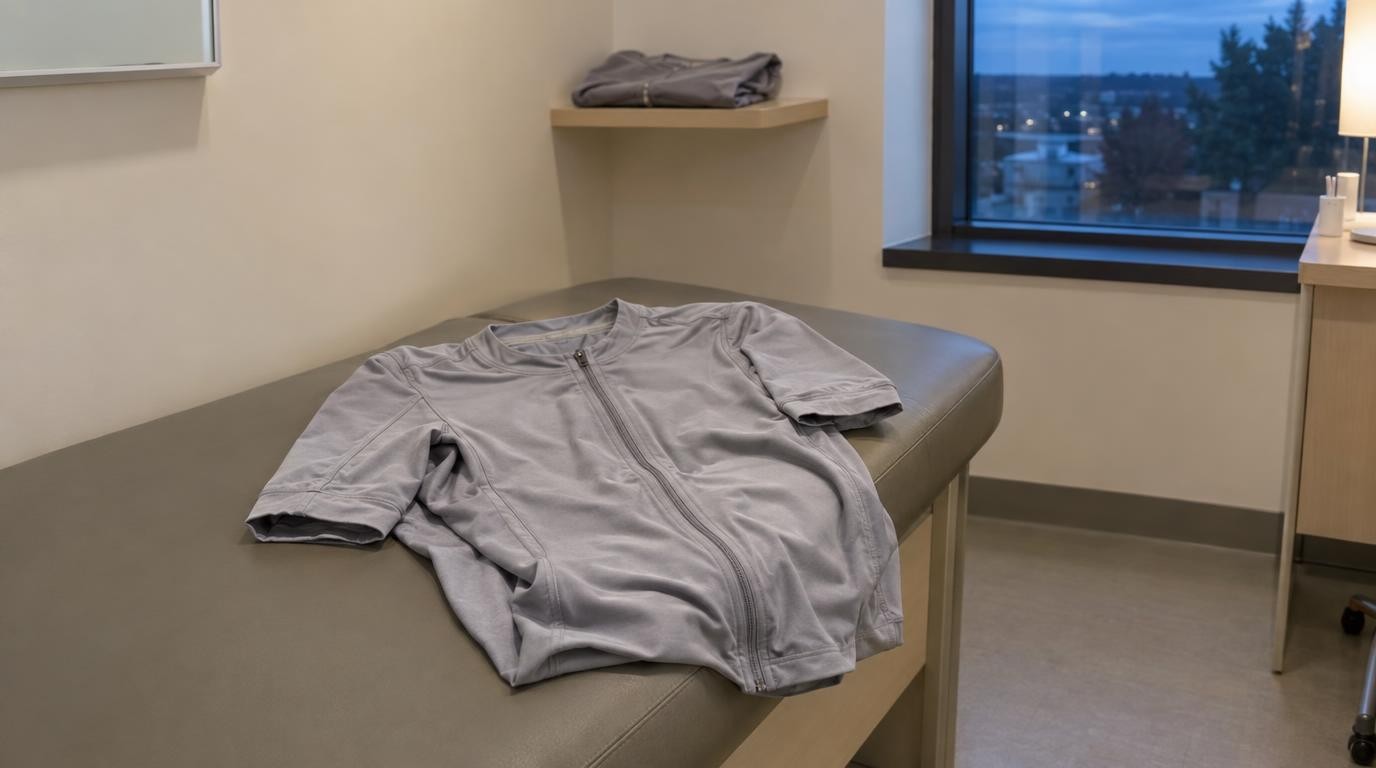
Swelling can temporarily make the chest look full, uneven, or firmer than it will later. Incision lines may fade as healing continues, although scars are permanent. A bulge or asymmetry that persists or worsens deserves assessment at follow-up rather than interpretation from a photo alone. Our male breast tissue removal recovery guide discusses how appearance can evolve during healing.
What does this clinic use during postsurgical care?
Our postsurgical care may include staged compression garments, ultrasound-assisted massage, and drainage methods, with the clinician directing their use for the patient’s plan. We typically use a drainless approach or a rubber-band technique rather than a large drain. These measures are parts of recovery care, not proof that swelling will resolve on an exact schedule.
What Are the Risks, Side Effects, and Reasons to Delay Surgery?
Swelling can occur during healing, and surgical scars are permanent even if they fade. An article on the American Society of Plastic Surgeons’ site lists bruising, bleeding, fluid collections, contour irregularities, loss of nipple skin, visible scarring, nipple numbness or inversion, loose breast skin, and asymmetry as common complications. Infection and anesthesia-related problems are also possible.
Can gynecomastia surgery leave scars or change nipple sensation?
Yes. Every incision leaves a scar, although its location and visibility vary. We use port protectors to reduce friction at liposuction entry points and select incisions according to the patient’s anatomy; neither measure eliminates scarring. Our guide to gynecomastia surgery scar visibility explains why scar appearance can differ between patients.
Swanson’s 2025 retrospective series reported a 21% complication rate across its combined patient group: 3 patients, or 6%, developed hematomas, and 5 patients, or 9%, underwent revisions. Those figures are findings from that series, not complication rates for Boston Gyno or a prediction for an individual patient.
When should a patient seek medical evaluation before considering surgery?
Have a new or unexplained enlargement evaluated before treating it as a cosmetic concern, particularly if a lump is hard or fixed, sits away from the nipple, or occurs with nipple discharge, skin changes, or enlarged nearby lymph nodes. Review any possible underlying cause and any health factor that could affect surgery or anesthesia. Discuss your own risks and suitability with your licensed clinician before making a treatment decision.
After surgery, seek urgent care for chest pain, trouble breathing, significant bleeding, or rapidly worsening swelling. Contact the surgical team promptly for fever, spreading redness, or other concerning changes.
Is Gyno Surgery Worth It Compared With Other Options?
Gynecomastia surgery may be worth considering when persistent tissue affects the contour you want and the expected change justifies the scars, recovery, and uncertainty about sensation. Observation or addressing an underlying cause may be more appropriate in other circumstances. In Swanson’s 2025 retrospective series combining gynecomastia and gender-affirming top surgery patients, 15 surveyed patients (83%) reported being comfortable exposing their chest after surgery, compared with one (6%) before surgery. Those figures describe surveyed patients across both groups, not Boston Gyno patients, and do not predict how you will feel. The useful comparison is between treatments for your anatomy, not between your chest and someone else’s after photo.
When is liposuction alone different from gland removal?
If fatty fullness is your main concern, ask whether a change in body weight could meet your goals without surgery. A liposuction-only procedure may also allow a quicker return to routine activities than a procedure requiring tissue excision, but it may not meet your goals if gland tissue causes the bulge. Removing persistent gland tissue or substantially loose skin may provide more of the change you want, with an incision plan and recovery suited to that work. Ask what improvement and tradeoffs are realistic for each option.
What questions should you ask before choosing surgery?
- Is my chest fullness mainly fat, gland tissue, loose skin, or a combination?
- What contour change is realistic for my starting anatomy, and where would scars be?
- How will the proposed plan address the nipple-areola complex, and what uncertainty remains about sensation?
- What recovery care and follow-up will I need, and what alternatives are reasonable?
A photographed result cannot promise satisfaction or confidence. The decision rests on whether the proposed change and its tradeoffs fit your priorities.
Frequently Asked Questions
How soon can I go back to work after gynecomastia surgery?
Some patients return to work within a few days after a simpler procedure, while more extensive surgery may require two to three weeks, according to the American Society of Plastic Surgeons. The timing depends on what was done and the demands of your job.
When can I work out after gynecomastia surgery?
Exercise usually resumes gradually, not all at once. An article on the American Society of Plastic Surgeons’ site describes light cardio in week two and recommends avoiding upper-body work for at least 4–6 weeks. The American Society of Plastic Surgeons also describes full recovery and release from activity restrictions at about six weeks. Follow our team’s instructions for your procedure and healing; clearance for activity is different from the time needed to judge your final chest contour.
Can gynecomastia come back after surgery?
Surgical results are generally long-lasting, but chest enlargement can return. Remaining breast tissue may enlarge if a contributing cause continues, and weight gain can also increase chest fullness.
Can gynecomastia surgery fix puffy nipples?
Yes, male breast reduction can address puffy nipples when underlying fat or glandular tissue contributes to their appearance. The American Board of Cosmetic Surgery identifies puffy nipples as a treatable concern, but the right technique depends on an examination. At Boston Gyno, we assess gland, fat, skin, and nipple position before proposing a plan.
Why does my chest still feel firm after gynecomastia surgery?
Firmness can be part of postoperative swelling as the chest heals. The American Society of Plastic Surgeons notes that a firm tissue texture associated with swelling can take several months to dissipate. Contact your surgical team if firmness worsens or comes with concerning symptoms.
How long do gynecomastia surgery scars take to fade?
Gynecomastia surgery scars are permanent, though they can become less noticeable over time. The American Society of Plastic Surgeons’ article says scars may take a full year to fade, especially in darker-skinned patients. Scar appearance depends on the incision and individual healing; a recent after photo may not show how a scar will eventually look.
What Should You Bring to a Gynecomastia Consultation in Boston?
Bring examples of starting chests similar to yours and a short list of questions about tissue type, incision placement, nipple preservation, recovery, and personal risks. Ask when comparison photos were taken and how results are followed over time. A consultation tests whether the proposed approach fits your anatomy rather than promising a photographed outcome.
- Save examples with similar fullness, skin looseness, and nipple position.
- Note changes in your chest and any possible contributing factors you want evaluated.
- Ask which incision is proposed, what the plan does for fat and gland tissue, and whether skin removal is needed.
- Ask how healing and results will be assessed at follow-up.
If you are coming from Watertown, Massachusetts, contact Boston Gyno for a consultation at our Boston clinic. We can discuss your goals, examine the anatomy behind them, and explain whether our male breast reduction approach is a suitable fit.
This information is general and is not medical advice. Talk to a licensed clinician about your own situation before making a treatment decision.
See before-and-after photos in the Boston Gyno gallery.



