

Last updated: October 14, 2026
CoolSculpting may reduce localized male chest fat, but it cannot remove glandular gynecomastia. Boston Gyno offers male breast reduction surgery in Boston, Massachusetts.
Can CoolSculpting treat gynecomastia or only chest fat?
CoolSculpting targets fat, not glandular breast tissue. Fat freezing may help a man whose chest fullness is predominantly a treatable pocket of fat, but it cannot resolve enlargement caused by gland. Because fat and gland can coexist, an examination is more useful than appearance alone when choosing male chest fat removal or gynecomastia surgery.
What is the difference between glandular gynecomastia and pseudogynecomastia?
Gynecomastia involves enlarged breast gland tissue, sometimes alongside fat. Mayo Clinic defines pseudogynecomastia as increased breast fat without increased gland tissue. A chest that looks soft can still contain gland beneath the nipple, so photographs and a pinch test alone may not settle the difference. Our guide to pseudogynecomastia versus gynecomastia explains why that distinction changes treatment options.
How does CoolSculpting work on the chest, and when might results appear?
CoolSculpting uses controlled cooling to injure fat cells in a treatable layer, after which the body gradually clears them, as the American Society of Plastic Surgeons explains. Changes are not immediate, and a smaller fat layer does not mean a smaller breast gland. Any estimate of fat reduction describes treated fat, not a guaranteed change in chest circumference or projection.
The 2014 review Cryolipolysis for noninvasive body contouring: clinical efficacy and patient satisfaction reported reductions of up to 25% in subcutaneous fat at a treatment site after one treatment; this is not a male-chest result. Mayo Clinic Press summarizes studies reporting reductions of 10.3% to 25.5% in treated-area fat thickness; that range does not predict an individual male-chest result. An article on the American Society of Plastic Surgeons website reports that visible changes may begin as early as three weeks and are most noticeable one to three months after treatment. Some patients need more than one session.
Eliminated fat cells do not return, but remaining fat cells can enlarge with weight gain, changing the chest contour. This does not guarantee a permanent chest shape or establish a male-chest-specific duration.
Does FDA clearance mean CoolSculpting is cleared specifically for the male chest?
No. FDA 510(k) clearance means a device was found substantially equivalent to an already marketed device; it is not FDA approval for treatment on every body area. Mayo Clinic Press lists the abdomen, flanks, thighs, upper arms, back, fat beneath the buttocks, and fat under the chin and jawline among cleared treatment sites, but not the male chest. Treating the male chest with CoolSculpting is off-label.
Who is a good candidate for chest fat freezing?
A potential candidate is near their target weight, has a small, localized pocket of treatable chest fat, and wants a modest change without surgery. The American Board of Cosmetic Surgery describes CoolSculpting as a match for people near their target weight with small, localized fat deposits; it is not a weight-loss treatment. Palpable gland beneath the nipple, loose chest skin, and the desired final contour can all change that assessment. Fat freezing is a poor match when the main concern is glandular fullness or skin that will remain loose after fat reduction.
Beyond the distinction between chest fat and gland tissue, a stretched or lowered areola may affect the choice of treatment. Fat freezing cannot reposition the nipple or areola; surgery can include repositioning when needed.
Can stage 2 gyno go away without surgery?
Sometimes gynecomastia goes away without surgery, but a “stage 2” label alone cannot predict whether it will. Puberty-related enlargement may resolve, while the Cleveland Clinic notes that gynecomastia associated with chronically low testosterone may not go away without treatment. Cooling surrounding fat will not remove persistent gland tissue.
What happens during a CoolSculpting session, and is there downtime?
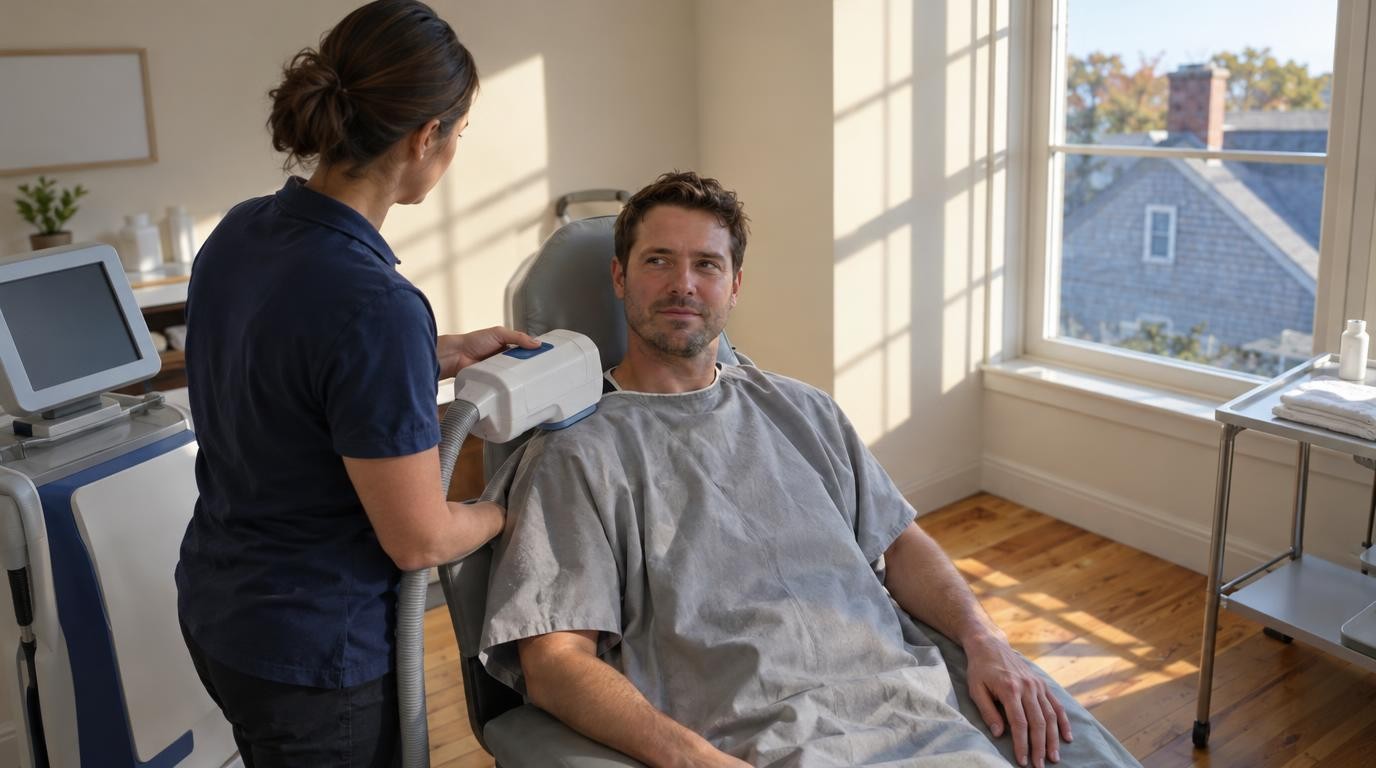
CoolSculpting involves no incisions or surgical anesthesia. Most people can return to ordinary activities immediately, although temporary discomfort or altered sensation can follow.
- The provider assesses the fat layer and whether an applicator fits the intended area.
- The external applicator cools the fat. You may feel pulling, pressure, or intense cold before the area becomes numb.
- The provider removes the applicator and checks the treated skin.
How long does a chest fat-freezing appointment take?
Mayo Clinic Press reports 35 minutes to one hour per treatment area; treating multiple areas may take several hours. An article on the American Society of Plastic Surgeons website describes a 60-minute traditional CoolSculpting session. Neither estimate establishes the total appointment time or a verified treatment duration for the male chest.
What are the risks and reasons to avoid CoolSculpting?
CoolSculpting may cause temporary redness, swelling, bruising, tenderness, numbness, tingling, or stinging. The 2014 review Cryolipolysis for noninvasive body contouring: clinical efficacy and patient satisfaction says redness, bruising, and temporary numbness usually resolve within 14 days. It reported late-onset pain about two weeks after treatment in 0.1% of cases, resolving without intervention. Rare paradoxical adipose hyperplasia causes treated fat to enlarge rather than shrink and may require surgical correction.
Cryoglobulinemia, cold agglutinin disease, and paroxysmal cold hemoglobinuria are contraindications to controlled-cooling fat reduction. Review current device labeling and your medical history with your own clinician before treatment. Seek prompt medical attention for severe or worsening pain, blistering or other significant skin injury, or concerning swelling. A new hard, fixed breast lump, nipple discharge, or skin changes warrant medical evaluation rather than cosmetic treatment; an article on the American Society of Plastic Surgeons website advises a thorough assessment for these findings.
Why is CoolSculpting not popular anymore?
The question assumes a decline that should not be taken as established. Safety concerns, the possibility of needing additional treatment, and CoolSculpting’s inability to remove gland tissue can influence an individual decision. For a man with glandular gynecomastia, limited usefulness for his particular chest is more relevant than a claim about the procedure’s overall popularity.
How many inches can CoolSculpting remove from the chest?
There is no established number of inches CoolSculpting can reliably remove from a male chest. Chest circumference includes more than the treated pocket of fat, while gland tissue, loose skin, and starting anatomy affect the visible contour.
A percentage reduction in a treated fat layer cannot be converted into inches or the same percentage reduction in breast projection. Before-and-after measurements and photographs may document an individual change, but cannot establish an inch target in advance.
Can Ozempic cure gynecomastia?
No. Weight loss associated with semaglutide may reduce body fat, including some chest fat, but it does not directly remove enlarged breast gland tissue. A chest that remains full after weight change may contain gland, remaining fat, loose skin, or a combination. Identifying the remaining tissue is more useful than assuming another fat-reduction method will finish the job.
An article on the American Society of Plastic Surgeons website identifies semaglutide as the active ingredient in Ozempic and explains that it mimics GLP-1, a hormone involved in signaling fullness.
When might gynecomastia surgery be more appropriate than CoolSculpting?
Gynecomastia surgery may be more appropriate when an adult’s chest fullness includes breast gland or when fat-only treatment is unlikely to achieve the desired contour. If loose skin is also significant, treatment may need to address it separately.
The options differ in the tissue they address and the recovery they require:
| Option | What it can address | Expected change | Recovery considerations |
|---|---|---|---|
| CoolSculpting | Localized fat, not gland or loose skin | Gradual, generally modest; multiple sessions may be needed | Ordinary activities can usually resume immediately |
| Chest liposuction | Fat, but not enlarged gland or significant loose skin on its own | Can remove more fat in one session than CoolSculpting | Requires healing and may cause bruising or swelling |
| Male breast reduction involving gland removal | Gland and, when needed, fat; skin removal may also be possible | Depends on the tissue removed and the patient’s anatomy | Requires healing and leaves scars |
The distinction between chest liposuction and gynecomastia surgery is especially important when gland beneath the nipple contributes to projection. The Cleveland Clinic explains that male breast reduction may use liposuction, tissue excision, or both. Risks include bleeding, infection, bruising, numbness, asymmetry, and scars that fade but do not disappear completely.
What treatment and recovery does Boston Gyno describe for male breast reduction?
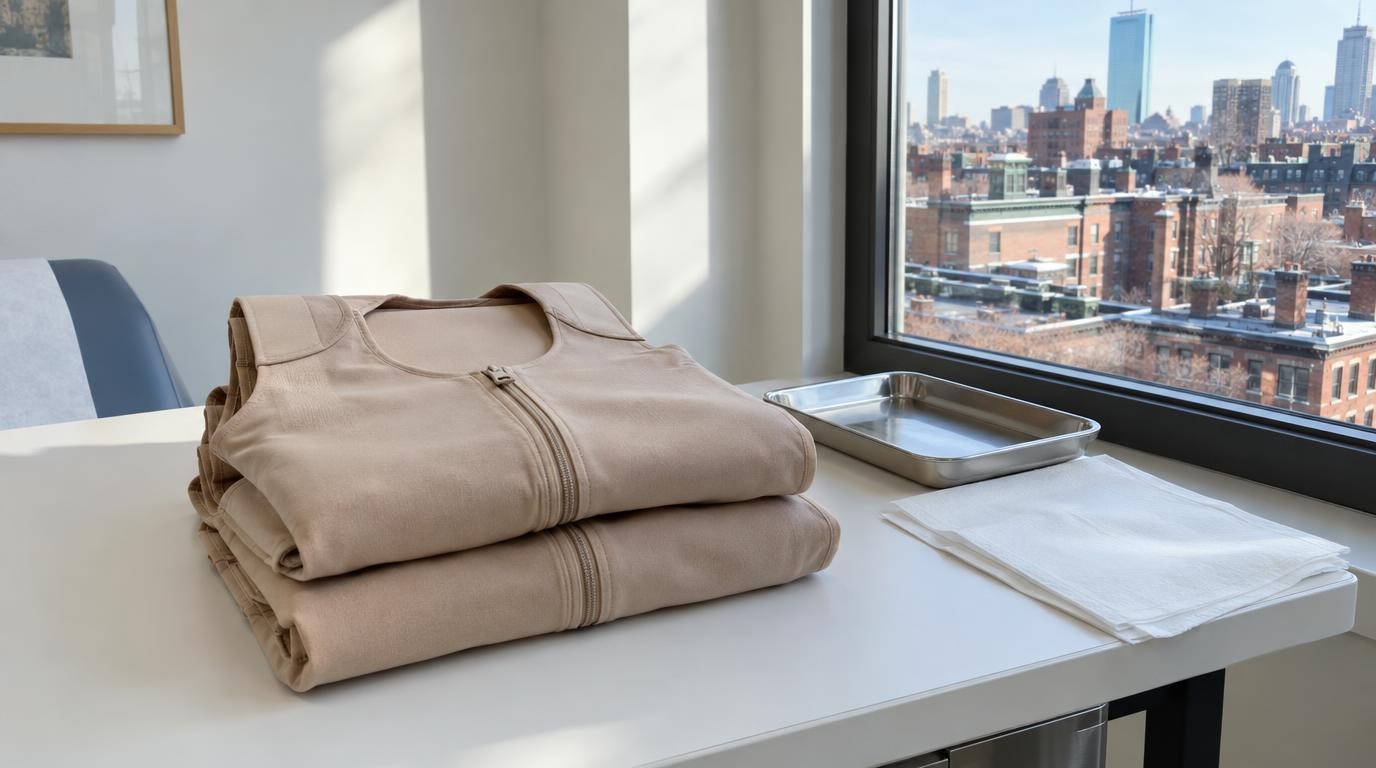
At Boston Gyno, we customize male breast reduction to the tissue and contour being treated. We use VASER Liposelection and power-assisted liposuction for chest contouring and, for appropriate candidates, a small lateral puncture approach to reducing enlarged gland tissue. We perform most procedures with local tumescent anesthesia; we may occasionally use inhaled nitrous oxide for additional comfort. We typically use a drainless or rubber-band technique rather than a large drain.
Our postoperative care includes staged compression garments, ultrasound-assisted massage, and drainage methods intended to support healing and contour. During liposuction, we use skin port protectors to reduce the chance of thick scars caused by friction at the access sites. The technique and recovery plan depend on the examination; a small puncture can still leave a scar, and results vary.
Frequently Asked Questions
Can teenage gynecomastia go away without CoolSculpting or surgery?
Yes. Puberty-related gynecomastia often resolves as hormones stabilize. Mayo Clinic says it often goes away without treatment in less than two years, and a teen’s care team may recommend checkups every 3 to 6 months. A teen with persistent enlargement, pain, or other concerning symptoms should see their pediatrician or family doctor.
If a medication is causing my gynecomastia, should I try fat freezing?
No. If a medication is causing glandular enlargement, fat freezing will not remove that tissue. Mayo Clinic says a prescriber may recommend stopping the medication or trying an alternative; do not change a prescribed medication on your own.
How many CoolSculpting sessions might chest fat need?
There is no established session count for an individual male chest. Mayo Clinic Press reports an average of 2 to 3 treatments per area, usually repeated within 1 to 3 months, for CoolSculpting generally; that average is not a chest-specific treatment plan.
Would I need imaging before treating an enlarged male chest?
Not everyone needs imaging. A clinical examination can help determine whether testing is needed to identify a cause or rule out another condition. An article on the American Society of Plastic Surgeons website advises thorough evaluation, potentially including mammography or MRI, for a suspicious lump—particularly one that is hard, fixed, away from the nipple, or accompanied by discharge or skin changes.
How does recovery from gynecomastia surgery compare with CoolSculpting?
CoolSculpting usually allows an immediate return to ordinary activities, although temporary discomfort or numbness may follow. An article on the American Society of Plastic Surgeons website says return to work and exercise after chest liposuction alone is typically less than one week, while gland removal may take two to four weeks before routine activities are tolerable. Individual recovery varies.
Can gynecomastia affect only one side of my chest?
Yes. Gynecomastia can affect one side or make one side more prominent than the other. If one-sided fullness is new or changing, have a clinician examine it before choosing fat freezing or surgery. One-sided fullness alone does not establish its cause.
What should you do next if you are considering CoolSculpting for gynecomastia?
For patients coming from Malden, Massachusetts, the practical question is whether chest fullness comes from localized fat, gland tissue, loose skin, or a combination. The answer affects what fat reduction alone could accomplish.
Contact Boston Gyno in Boston for a male breast reduction consultation to assess your anatomy and discuss realistic results, healing, and scarring.
This information is general and is not medical advice. Talk to a licensed clinician about your own situation before making a treatment decision.



